

Case Study: SaaS Form Builder for Website Creation & Maintenance
Role: Senior UX / Product Designer
Product Type: SaaS website management platform
Timeline: ~3 months
Platforms: Web (desktop-first, responsive)
Team: Product Manager, Engineers, QA, Content Strategist
Objective:
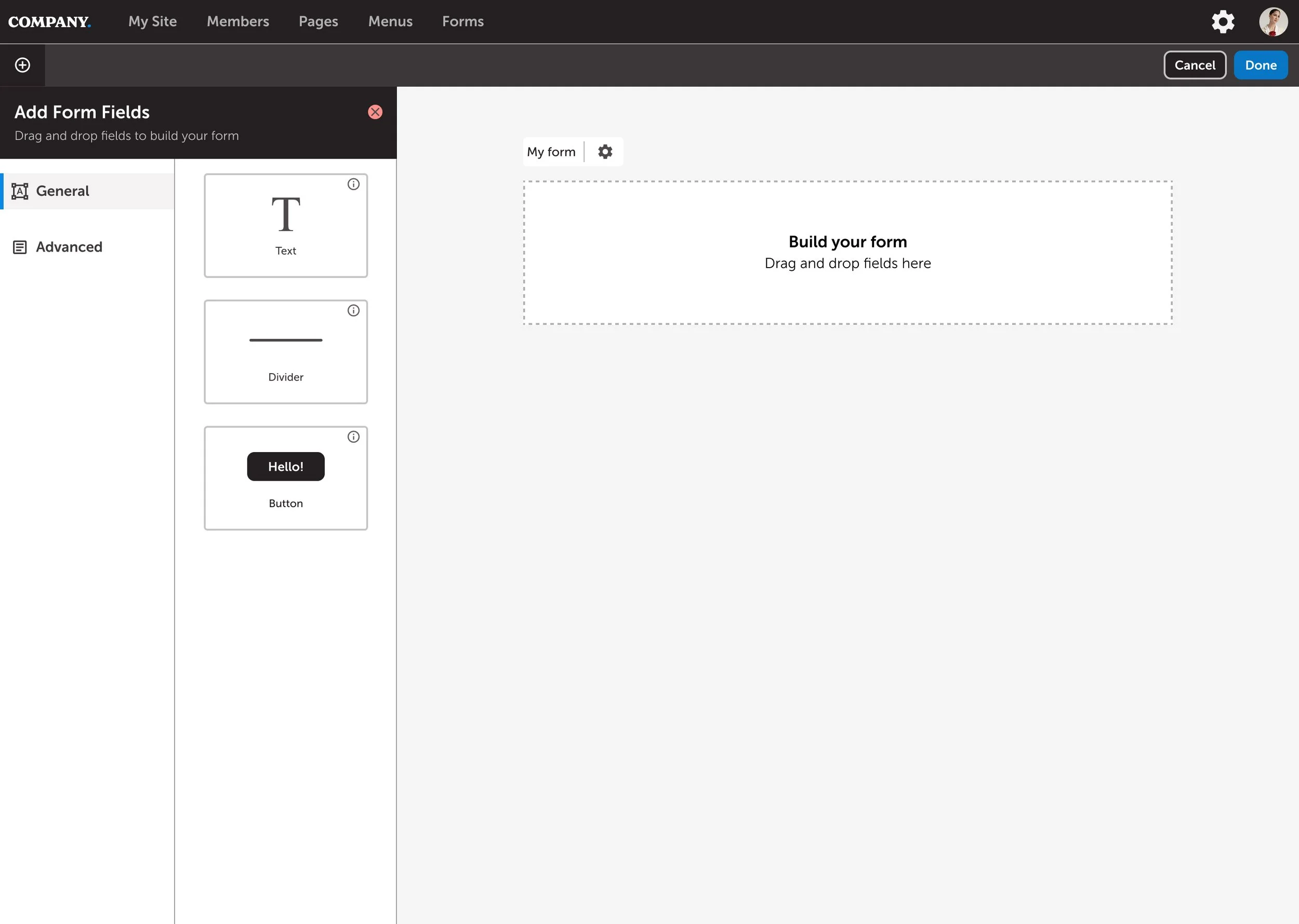
Design a scalable form-builder system that empowers non-technical users to create, edit, and maintain forms within their website without developer involvement, while remaining flexible enough for advanced configurations.
The Problem
As the platform evolved, users needed to manage increasingly complex forms within their website. Existing solutions were:
Rigid – hardcoded forms that required engineering changes
Inconsistent – different content types followed different patterns
Error-prone – users struggled with validation, formatting, and dependencies
Slow to scale – every new content type increased maintenance cost
This created friction for users and bottlenecks for internal teams.
Goals & Success Criteria
User Goals
Create and update form content confidently
Understand what fields are required and why
Avoid breaking live pages through errors
Business & System Goals
Reduce engineering involvement in content changes
Support new content types without redesigning the UI
Establish a reusable, extensible foundation for future features
Success Metrics
Reduced support tickets related to form editing
Faster time-to-publish for new form
Decreased engineering effort per new field type
Discovery & Research
I partnered closely with Product and Engineering to align on constraints and opportunities.
Inputs
Stakeholder interviews (Product, Support, Engineering)
Review of existing CMS and form-builder patterns
Audit of current content types and edge cases
Support ticket analysis to identify user pain points
Key Insights
Validation errors were often discovered too late
Field logic (required, conditional, reusable) was inconsistent
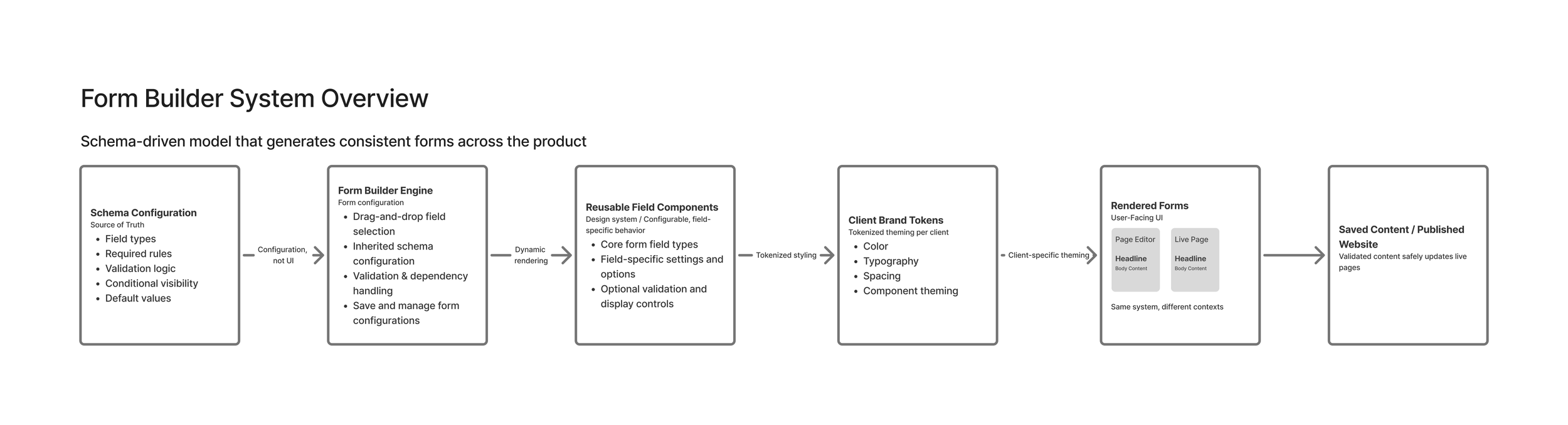
Engineers needed a schema-driven system, not one-off UIs
Design Strategy
Rather than designing individual forms, I focused on designing the system.
Core Principles
Schema-first, UI-second
Progressive disclosure over complexity
Clear mental models for non-technical users
Scalable patterns over custom solutions
How the Form Builder Fits Into the Product
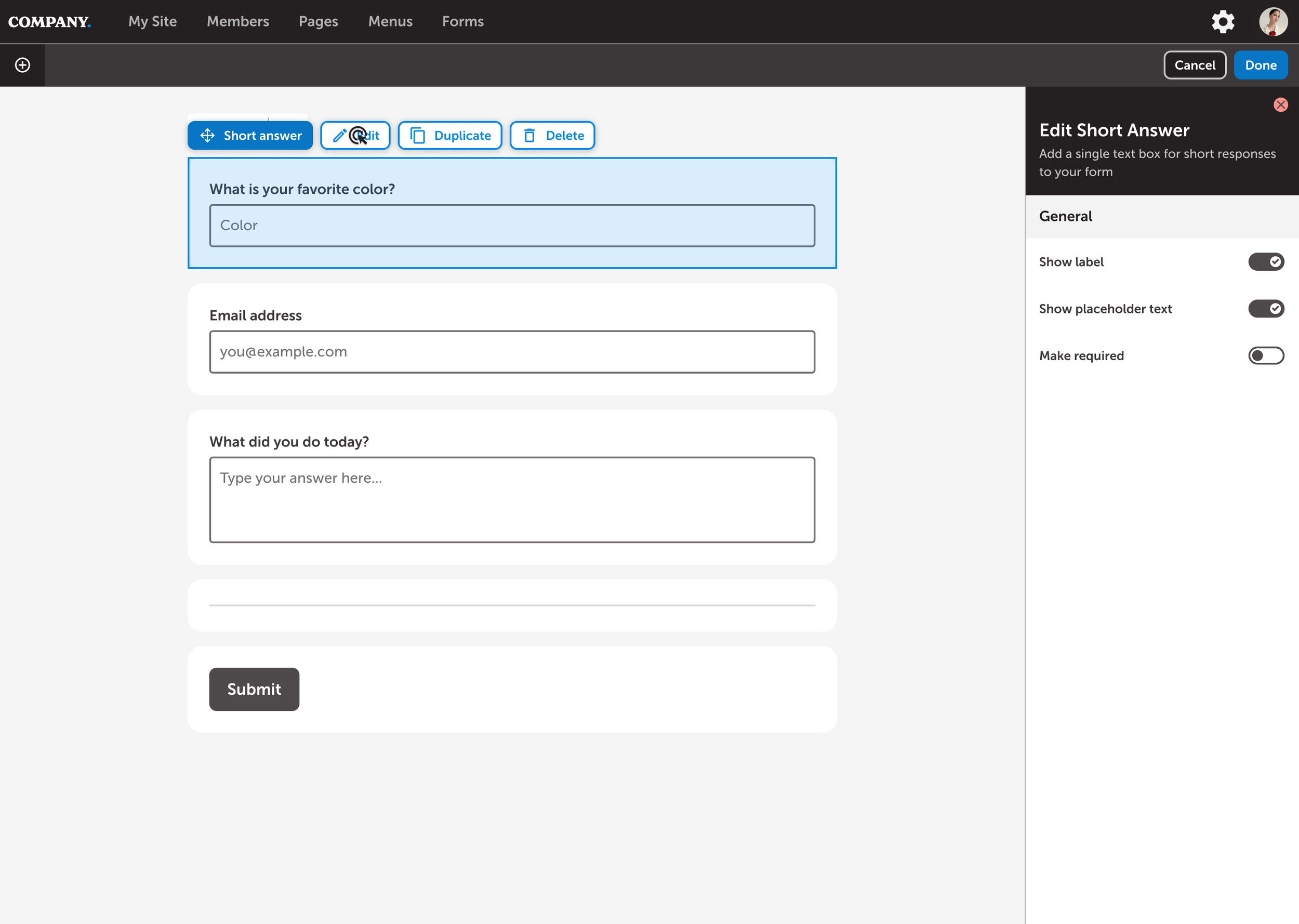
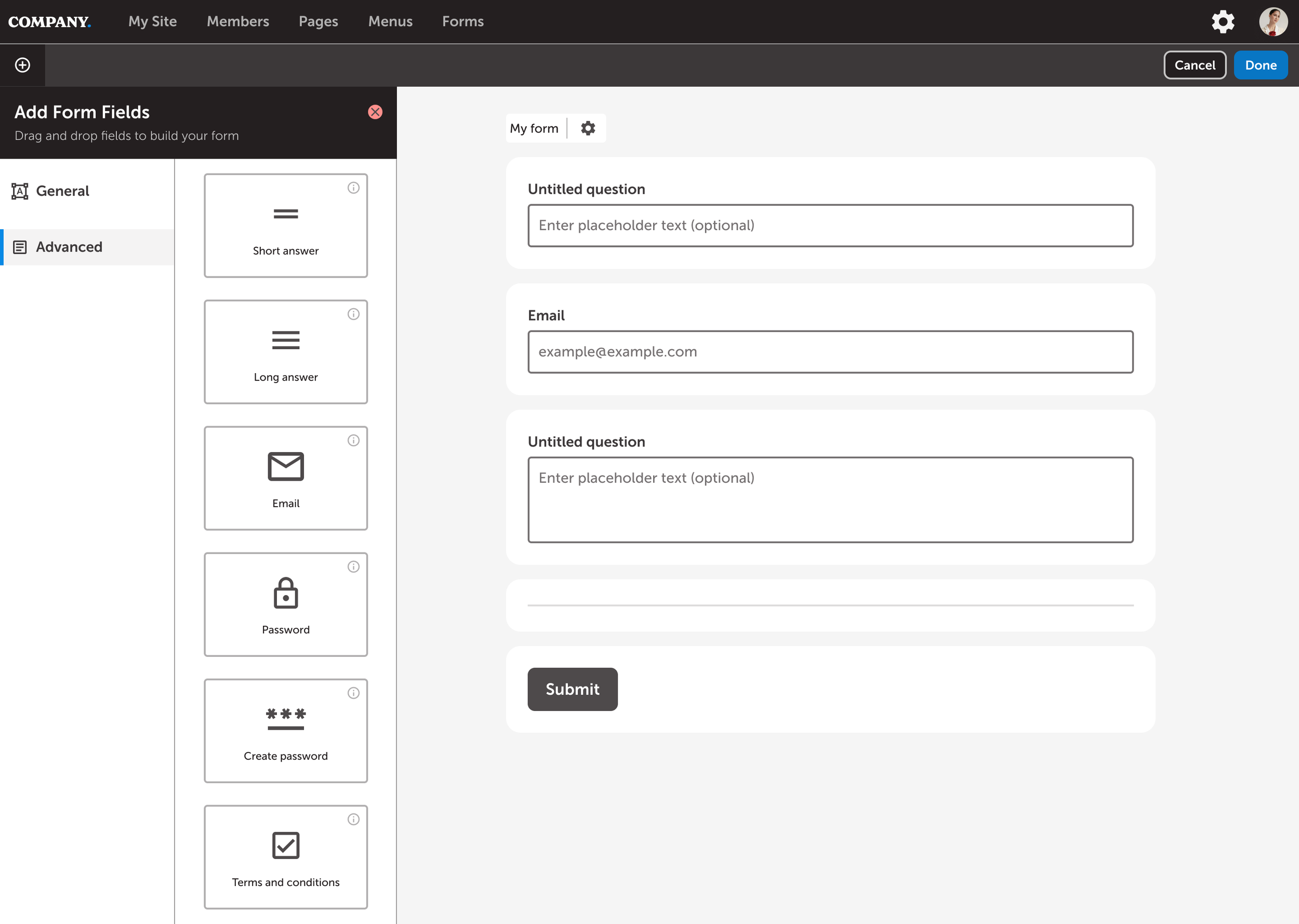
To ensure the form builder integrated cleanly into the existing product, I mapped a user flow that outlined how users access, build, configure, and reuse forms within the platform. The flow helped align product, design, and engineering on entry points, ownership, and dependencies, while ensuring the experience felt cohesive rather than bolted on. This approach clarified where configuration lived, how forms were previewed and saved, and how they ultimately rendered across pages and sections.
Solution: Modular Form Builder System
1. Schema-Driven Architecture
I collaborated with engineering to define a flexible schema that could drive:
Field types (text, rich text, media, toggles)
Validation rules
Conditional logic
Default values and helper content
This allowed the UI to adapt dynamically without redesign.
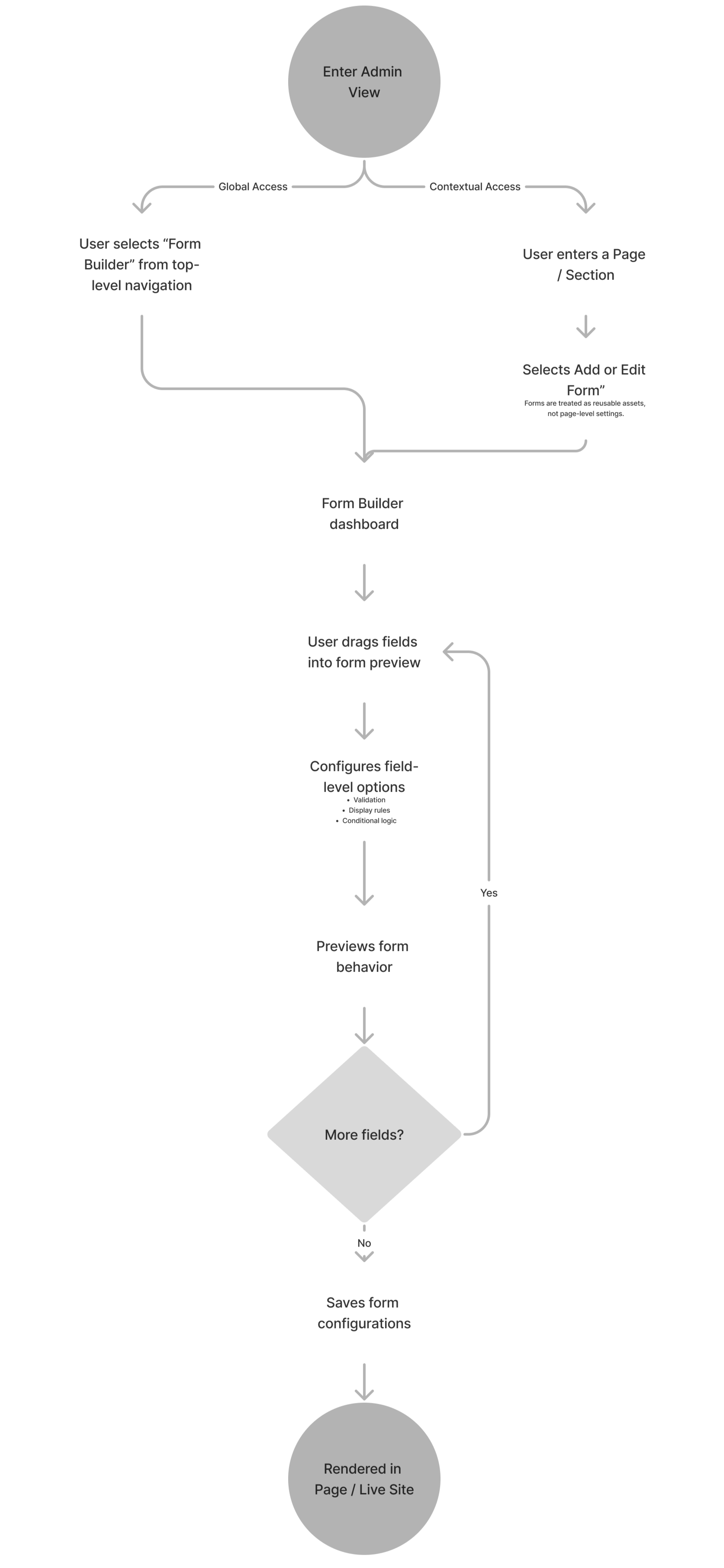
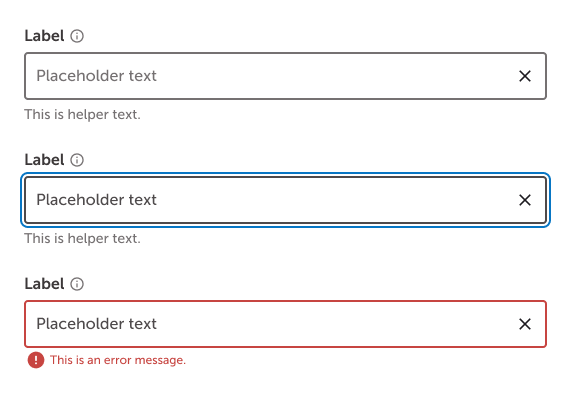
2. Modular Field Components
Each field was treated as a reusable component with:
Label + helper text
Inline validation
Optional advanced settings
Consistent spacing and hierarchy
This ensured visual and behavioral consistency across the product.
3. Conditional Logic & Dependencies
To reduce cognitive load:
Advanced fields appeared only when relevant
Dependencies were explained with tooltips
Warnings surfaced before publish, not after
This prevented common user errors while maintaining flexibility.
4. Content Safety & Confidence
To protect live sites, I introduced:
Required field indicators with context
Inline validation and previews
Clear save vs publish states
Destructive action confirmations
Users felt more confident making changes independently.
Collaboration & Execution
I worked closely with:
Product to prioritize flexibility vs usability
Engineering to align UI patterns with technical constraints
Content/Support to ensure language was clear and user-friendly
Deliverables included:
System diagrams
Component specs
Interaction states
Edge-case documentation
Outcomes & Impact
Enabled rapid creation of new content forms without redesign
Reduced engineering time spent on form-related changes
Improved user confidence and reduced content-related errors
Established a foundation used across multiple features
Most importantly, the form builder became a core platform capability, not just a feature.
Reflection
This project reinforced the importance of:
Designing systems, not screens
Partnering deeply with engineering early
Balancing power and simplicity in SaaS tools
If iterated further, I would:
Add versioning and rollback for content changes
Introduce form analytics to identify drop-off points
Expand accessibility testing for complex field types
Note: Visuals shown are simplified recreations due to NDA and do not reflect the final production UI.